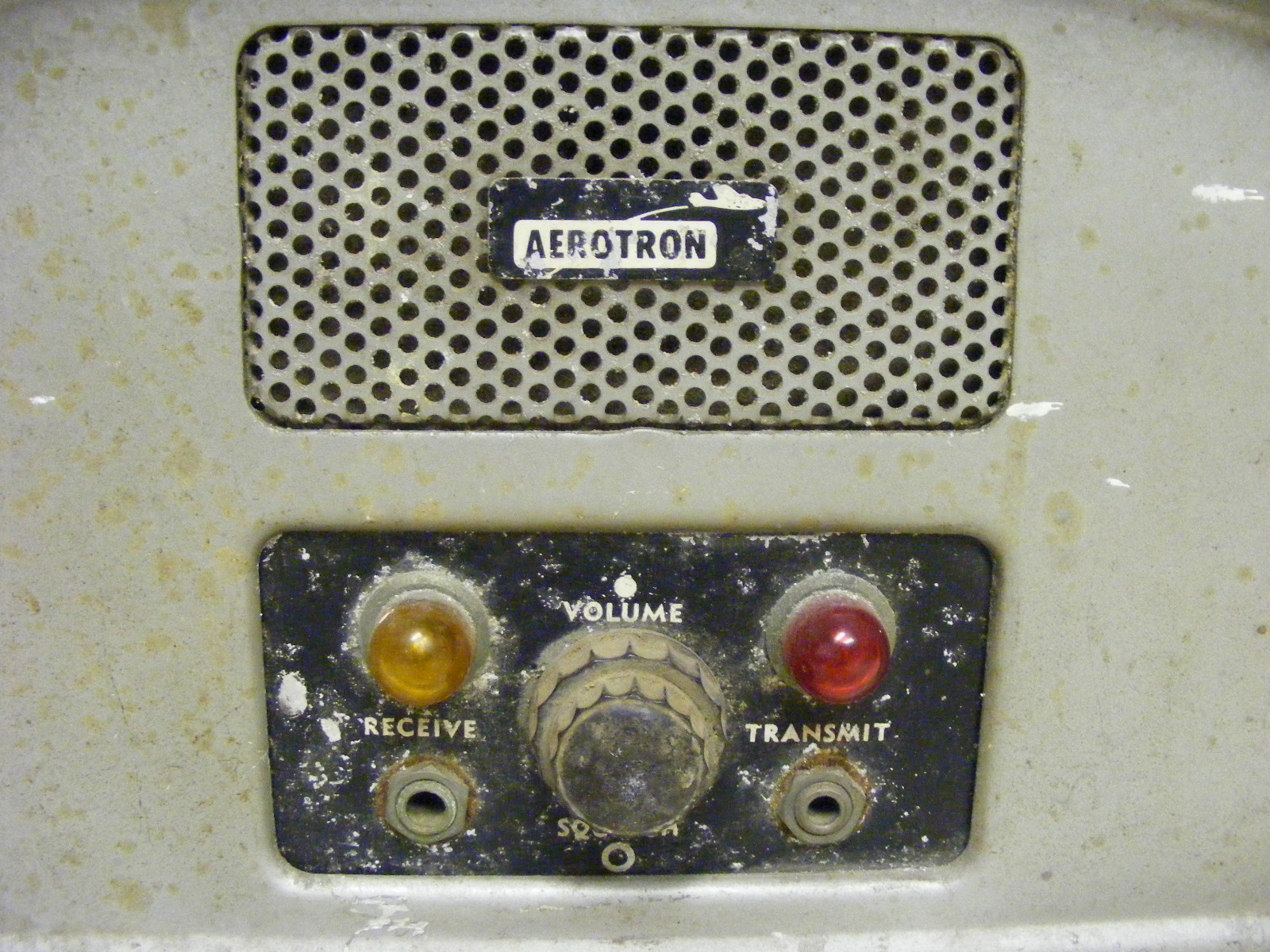
Make
Aerotron
Description
VHF Transmitter
Overview

Aerotron VHF transmitters were commercial radio transmitters built for land mobile service during the 1950s through 1970s. These units were used in fixed base station and repeater applications for public safety, industrial, and utility communications. Designs are typically tube-based and intended for continuous-duty operation.
Technical Specifications
| Specification | Details |
|---|---|
| Manufacturer | Aerotron, Inc. |
| Type | VHF transmitter |
| Service | Land mobile radio |
| Frequency Range | Model-dependent (commonly 30–50 MHz or 150–174 MHz) |
| Modulation | FM |
| Power Output | Model-dependent |
| Power Source | 120/240 VAC |
| Construction | Tube-type (vacuum tube finals) |
| Duty Cycle | Continuous duty |
| Cooling | Forced air |
Physical Description
Aerotron VHF transmitters are typically constructed in heavy-duty metal enclosures, often rack-mounted for installation in communication systems. The front panel usually includes power controls, tuning adjustments, and analog meters for monitoring operating conditions. Internally, the units use vacuum tubes, large transformers, and point-to-point wiring designed for reliability and serviceability.
History
Aerotron, Inc. was a U.S. manufacturer known for producing durable communication equipment for commercial and public safety applications. Their VHF transmitters were widely deployed in base station and repeater roles during the expansion of land mobile radio systems. Many remained in service for extended periods due to their rugged construction, and surviving units are now primarily found in collections and restoration projects.
References
No verified, model-specific, fully accessible reference links available that meet the required criteria.